FIND YOUR PARS COURSE

Learn how to let children be children at home and at work
Online and in-person workshops and qualifications for parents and professionals, delivered by local PARS Licensed Trainers around the world. 

Plus our unique PARS Continuous Professional Development programme to keep us all learning and connecting. Many of our CPD events are open to practitioners and academics who have not done PARS training.

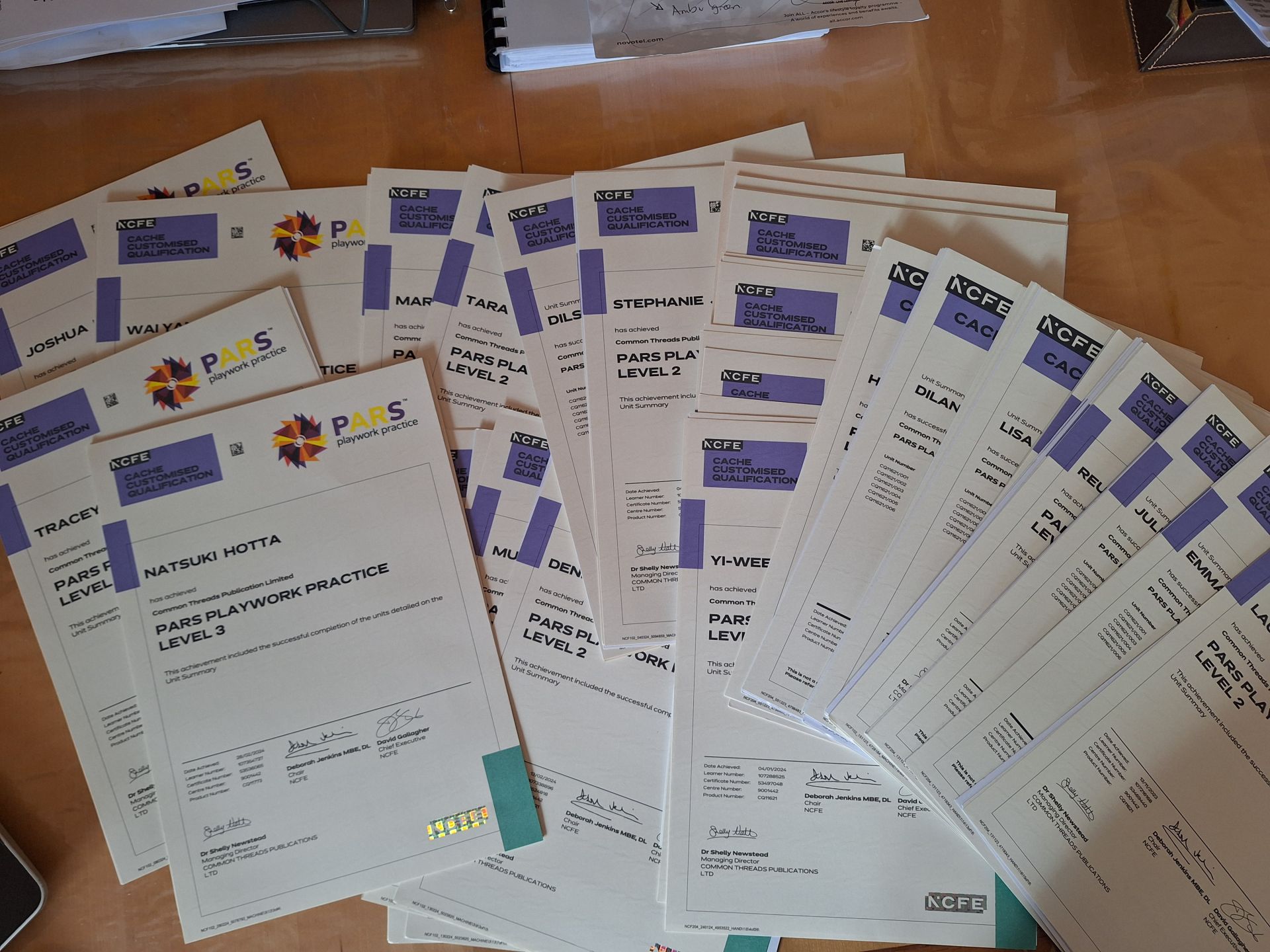
Common Threads is an NCFE International Award Centre and our PPP2, PPP3 and PPP4 programmes have been accredited by NCFE as Customised Qualifications.
In this great journey, I found challenges that reshaped my perspective, and gained valuable knowledge and skills that will enhance my interactions with children in both my professional and personal endeavours.

Sarah Aweida - Learning Coordinator at Dadu Children Museum, Qatar

This was a different way to look at how I observe and react to play. It has added another string to my bow when discussing play with other educators.

Adele Orangi, New Zealand

I am grateful to have taken part in this training. I have learn a new perspective that resonates really well with my own values; and this new information is continuing to challenge my own practice.

Isabelle Zastavnikovic, Australia

We now have a model which helps us to describe our practice in a professional way without having to resort to programming activities to demonstrate that we are professionals who know what we are doing.

Adam Smart, SmartKidz, UK

One immeasurable benefit of PARS is now having the language to engage with, both in self-reflection and in conversation with other practitioners and stakeholders. It means that we can now discuss what we think is happening for the children and what we think we can do to enhance (or meaningfully not ruin) what is happening, and to start to work on a collective understanding of our practice as a service.

Amy Blane, Australia

why pars practice?

Empower children to enjoy their childhoods
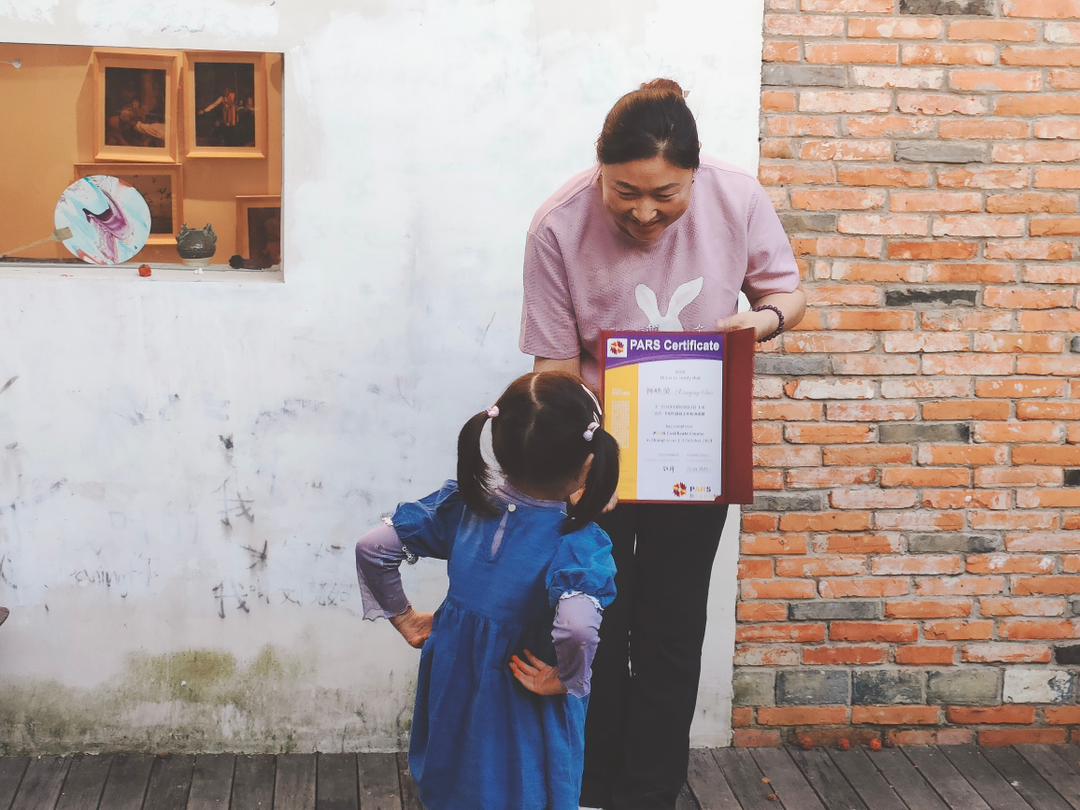
Developed from research and now used around the world, PARS qualifications teach tried-and-tested methods, theories and techniques to help you to...
  • value children's culture 
  • appreciate children's different perspectives
  • make consistent decisions about when to step in and when to step back
  • understand when risk is good for children and when it's not! 
  • talk to children confidently and sensitively when adult rules apply
  • play with children the way they want you to play with them!

"Changed approach"

PARS training changes mindsets and increases skills

Data from evaluation forms from learners on 14 PARS qualification courses in 2025 in Mexico, Singapore, Thailand, UK,  Hong Kong, Taiwan, mainland China, Australia, Qatar, New Zealand & Indonesia.

"Gained new skills and knowledge"

"Trying to change approach"

From entry level to expert!

Four levels of PARS training

PPP1

Introducing
PARS

Find out what PARS practice is all about and how it's used around the world.
(not accredited)

PPP2

PARS Beginner

Begin to use parts of the PARS model to let children be children at home and at work. 

PPP3

PARS ADVANCED PRACTITIONER
Learn how to put the whole of the PARS model into practice and master a new technical language to explain your practice to others.

(required to become a PARS Assessor)

PPP4

PARS Expert

Develop an in-depth understanding of the theory and practice of PARS. 
Empty space, drag to resize
(required to become a PARS Licensed Trainer or Internal Verifier)

INTRODUCing PARS - non assessed

PPP1

PPP1

  • Learn how PARS training empowers adults to free up time and space for children to be children - discover how PARS practitioners think and why!

  • Find out whether PARS playwork is for you and learn about how to join our internationally accredited courses.

  • Ideal introduction for anybody who wants to find out more about PARS playwork practice before committing to a longer assessed course.

Write your awesome label here.

PARS bEGINNERS - accredited by ncfe

PPP2

PPP2

Begin to use parts of the PARS model to let children be children at home and at work.

Write your awesome label here.
PARS ADVANCED PRACTITIONER - ACCREDITED BY NCFE

PPP3

PPP3 is our advanced practitioner programme. 
Learn how to put the whole of the PARS model into practice and master a new technical language to explain your practice to others.

PPP3 is a requirement for those who want to join the PARS Assessment Team.

The third difference is that traditional playwork focusses on the type of play which is usually described as ‘free play’, and the need for children to have this form of play in their lives and for adults to leave children to play in their own way. PARS has a broader aim, which goes back to the

original philosophy of the adventure playground pioneers, who saw play not as an aim, but an outcome. The adventure playground pioneers

recognised that play was an important part of children’s culture – a culture which was very different from the dominant adult culture. The

adventure playground pioneers felt that children were deprived not just of play, but of their childhoods by an adult world which prioritised

adult needs and perspectives at the expense of children’s needs and perspectives. The PARS model is based on that founding philosophy of the adventure playground pioneers – not children’s right to

play, but children’s right to be children, with all the ‘quirks’ and bafflements that that may involve from an adult perspective! PARS practitioners work with those divergences where the child andadult worlds meet (and often collide!), rather than going in with their own adult agendas of ‘learning’, or ‘development’, or even ‘play’. PARS playwork is therefore ‘pro-child’ (as John Bertelsen, the first playworker put it), rather than ‘pro-play’, and PARS practitioners respect and protect time and space for childhood, rather than just play. 

Write your awesome label here.
PARS EXPERT - ACCREDITED BY NCFE

PPP4

PPP4 is our highest level PARS qualification. It will enable you to articulate, develop and evaluate your PARS playwork practice and the whole of the PARS model itself.

PPP4 is a requirement for anybody who wants to become a PARS Licensed Trainer.

Frequently asked questions

Do I have to attend previous PARS training before I join PPP2 or PPP3?

There is no requirement for previous PARS training or playwork experience before joining a PPP2 or PPP3 programme. Anybody who wants to take part in PPP4 and become a PARS Licensed Trainer must complete PPP3 first.

Will I need to do homework?

Yes, afraid so! PPP2 and PPP3 are NCFE accredited Customised Qualifications, so all participants need to do weekly assignments during the course to demonstrate how they can put PARS playwork into practice when working with children. These assignments are assessed by our Assessment Team who will give feedback on each assignment. 

What is included in the cost of the course?

The cost includes all live teaching sessions and course materials, assessment and certificate from NCFE. There is nothing else you will need to pay once you have joined the course!

Once I get my PPP2 or PPP3 qualification, can I teach others to use PARS?

No. To teach PARS to others, you must be qualified to PPP4 and be a PARS Licensed Trainer. If you are qualified at PPP3, you may be eligible to join our PARS Schools Mentor Programme. For more information on how to share your PARS knowledge with others, please get in touch!

How long does my PPP2 or PPP3 Customised Qualification last?

Technically there is no expiry date for your NCFE certificate. However, we strongly encourage you to continuously develop your PARS playwork practice and you can find plenty of opportunities to do so here!

Do I have to attend previous PARS training before I join PPP2 or PPP3?

There is no requirement for previous PARS training or playwork experience before joining a PPP2 or PPP3 programme. Anybody who wants to take part in PPP4 and become a PARS Licensed Trainer must complete PPP3 first.

Our international learning community

Explore our further learning opportunities and get involved - even if you are not a PARS practitioner!

We love to learn from each other and from practitioners and academics from other disciplines. 

PARS........ Book Club

Develop your knowledge of literature about children and childhood.

Practitioners and academics from any background are welcome!

Introduction to the Play Cycle

Join Dr Pete King for this 1-hour introduction to the  Play Cycle theory.

Learn about updates and applications of the Play Cycle in research and practice.

Reflexions

Free quarterly meetings just for PARS practitioners led by Dr Shelly Newstead.

International Journal of Playwork Practice

The official journal of PARS playwork practice. It includes peer-reviewed papers, practitioner articles and book reviews.

All free to access and download.